Crate Training a Chow Chow and Preventing Separation Anxiety
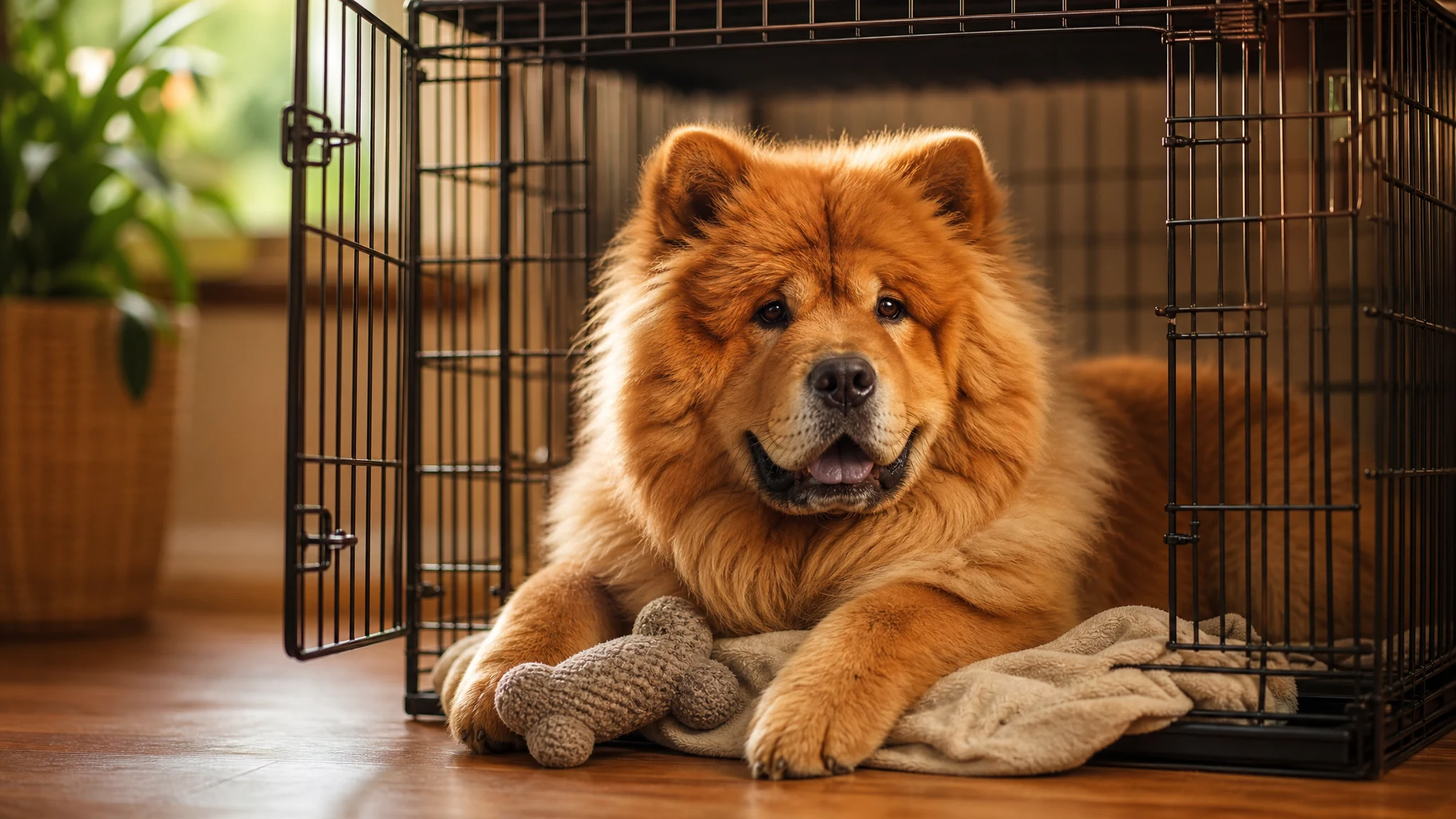
General training information. Every dog is an individual; for health or behavior concerns, see your veterinarian.
A Chow Chow is dignified, independent and often a little aloof. Orvis describes the breed as loyal to family and usually bonded to one favorite person. That same devotion is why alone time deserves careful, gradual practice.
Done well, chow chow crate training gives your dog a quiet den and gives you a safe way to manage the house. This guide walks through crate training a Chow Chow step by step, with a focus on keeping alone time calm so separation anxiety is less likely to take hold.
One honest note up front. The breed is described by Canine Bible as stubborn and best suited to experienced, consistent handlers. Individual dogs vary, so treat every timeline below as a rough guide and let your dog set the pace.
What You Will Need
- A properly sized crate with a secure latch and good airflow.
- A washable mat or bed that fits the crate floor.
- Small, soft treats your dog loves, cut into tiny pieces.
- A stuffable chew toy that is safe for your dog's size and chewing style.
- A crate cover or light blanket (optional), kept clear of the dog's reach from inside.
- A baby gate or exercise pen for a safe area outside the crate.
- A tape measure for sizing.
- A daily schedule for meals, walks, potty breaks and rest.
Choosing the Right Crate Size for a Chow Chow
Canine Bible and Orvis both list the breed at 17 to 20 inches tall and 45 to 70 pounds. That is a sturdy, thick-coated dog, and a thick double coat can make a dog look bigger than the body underneath.
Use the dog in front of you, not just the breed range. A good crate lets your dog stand up without ducking, turn around easily and stretch out lying down. Measure your dog standing and lying, then compare those numbers with the sizing chart from the crate maker. Check with the brand if your dog falls between sizes.
Puppies grow quickly. A large crate with a divider lets you shrink the space now and expand it later. A crate that is far too big makes it easier for a puppy to pick one corner as a toilet, which can slow house training.
Heat matters for this breed. Orvis notes that Chow Chows tire quickly and heat can be a problem. Choose a crate with plenty of ventilation and set it in a cool, shaded room, never in direct sun, a hot car or a stuffy corner. Ask your veterinarian how to keep your dog comfortable in warm weather.
Step-by-Step: Crate Training a Chow Chow
The Chow Chow Club's welfare article, "Please Train Your Chow," stresses that training starts the day the dog comes home. The steps below use rewards and patience, which fits the humane, reward-based approach supported by the American Veterinary Society of Animal Behavior (AVSAB).
Step 1: Set up a calm, central spot
Place the crate in a room where the family spends time, such as a living area. A dog that bonds closely with its people can find a far-off room isolating. Put the mat inside, prop the door open so it cannot swing shut, and leave it be.
Step 2: Let your dog discover the crate
Toss a few treats near the entrance. Then toss some just inside. Let your dog walk in, eat and walk out freely. Do not push, lure with force or shut the door yet.
Keep sessions short and upbeat. If your dog hesitates, go back to the last step that felt easy. A stubborn dog is often a cautious one, and rushing tends to backfire.
Step 3: Feed meals in the crate
Serve meals at the back of the crate with the door open. Once your dog eats comfortably, close the door during the meal and open it as soon as the bowl is empty. Over several days, lengthen the time by a few seconds at a time.
Step 4: Add a cue and short door-closed sessions
Pick one short word, such as "bed," and say it just as your dog steps in. Reward, close the door for a few seconds, reward again through the bars, then open the door. Build up to a minute, then a few minutes, while you stay in sight.
Open the door when your dog is quiet, not while it is protesting. If you open it during fussing, your dog may learn that noise opens the door.
Step 5: Give a chew and move around the room
Hand over a stuffed chew toy, close the door, and sit nearby. Then stand, walk across the room, and return. Reward calm behavior. Gradually add more movement, such as leaving the room for a moment and coming back before your dog worries.
Step 6: Build alone time in tiny pieces
This is the heart of preventing separation anxiety. Alone time should grow slowly enough that your dog stays relaxed at every stage.
- Leave the room for a few seconds and return calmly.
- Extend to 30 seconds, then a minute, then a few minutes.
- Practice stepping outside and coming right back.
- Add sounds of departure, such as picking up keys, without leaving every time.
- Try short real outings only after your dog stays settled through the earlier steps.
Mix up the lengths. A 30-second absence followed by a 3-minute one is better practice than a perfect staircase of times. Keep arrivals and departures low-key, with no big goodbyes.
Step 7: Use the crate for nights, then for naps
At night, keep the crate near your bed at first. Young puppies need potty breaks, so plan on getting up. You can move the crate gradually if you wish, but only as your dog stays comfortable.
Daytime naps in the crate help it become an ordinary part of life, not only a sign that you are leaving.
Socialization and Timing
The Chow Chow Club's welfare article says socialization before 12 to 16 weeks matters, and it notes a second fear period at 6 to 8 months. During those windows, keep new experiences gentle and paired with treats. A dog that feels safe meeting the world tends to cope better with being left, though nothing here is a promise.
Orvis describes the breed as standoffish with strangers, and Canine Bible says Chow Chows may be reserved with other dogs and are better with older children who understand boundaries. Plan introductions slowly. Teach children not to reach into the crate or bother a dog resting inside.
Daily Routine That Supports a Calm Dog
Orvis suggests about an hour of moderate exercise a day for the breed, rather than vigorous activity. A walk before a crate session can help a dog settle. Do it in the cooler parts of the day, and watch for tiring or heavy panting.
Mental work counts too. The Chow Chow Club lists obedience, rally, agility, Barn Hunt, Trick Dog, Canine Good Citizen and tracking among the activities the breed takes part in. Even a few minutes of simple trick practice can add structure to the day.
Signs of Separation Distress
Some fussing at the start of crate training is normal. Watch for patterns that continue or get worse. Signs that may point to distress include:
- Nonstop barking, howling or whining after you leave
- Drooling, panting or pacing that starts as you prepare to go
- Scratching or chewing at the door, walls or the crate itself
- Potty accidents in a dog that is otherwise house trained
- Refusing food or treats when left alone
- Trying hard to escape the crate, or hurting itself while doing so
Canine Bible says the breed is not overly vocal but will bark to alert. A dog that barks at a noise outside is not necessarily anxious. A dog that cannot settle whenever you are gone is a different picture.
When to See a Veterinarian
Call your veterinarian if you see signs of distress, or if your dog hurts itself in the crate, stops eating, or has sudden changes in toileting or behavior. Pain and medical problems can look like behavior trouble. Orvis lists conditions such as hip and elbow dysplasia, eye disorders and hypothyroidism among those seen in the breed, so a checkup is a sensible first step.
Do not try to diagnose your dog at home, and never give medication or supplements without veterinary direction. Your vet can also refer you to a qualified behavior professional if needed.
The Chow Chow Club also warns that serious problems such as aggression are not for group classes. If your dog guards the crate, growls when approached inside it, or shows other worrying behavior, get individual professional help rather than pushing on.
Common Mistakes to Avoid
- Using the crate as punishment. It should stay a safe, pleasant place.
- Moving too fast. Jumping from minutes to hours is a common cause of setbacks.
- Letting a puppy cry it out for long stretches. Distress can teach a dog that alone time is frightening.
- Making goodbyes dramatic. Big emotions can make leaving feel like a big event.
- Skipping exercise and mental work. A restless dog finds it hard to rest.
- Ignoring heat. A warm, stuffy crate is a risk for a thick-coated dog.
- Using harsh corrections. Shock, prong or choke collars, alpha rolls, scruffing and dominance tactics do not belong in any training plan. They can raise fear and make anxiety worse.
- Leaving a collar or loose items on a crated dog. These can catch or be swallowed.
Tips for Success
- Keep training sessions short and end on a win.
- Reward calm, quiet moments, not just entering the crate.
- Rotate a few special chew toys that appear only at crate time.
- Brush your dog regularly. Orvis notes heavy seasonal shedding from a thick double coat, and loose hair in the crate is easier to manage with a good routine.
- Stay consistent. Everyone in the home should use the same cue and rules.
- Keep notes on how long your dog stays relaxed, so you can see progress.
What Results to Expect
With steady practice, many dogs learn to treat the crate as a comfortable resting place, and gradual alone time may help lower the chance of distress. Progress is rarely a straight line. A Chow Chow's independent streak can mean good days and slower days.
Some dogs relax within a few weeks. Others need longer. If you hit a plateau, go back a step and make it easier. If your dog still struggles, talk to your veterinarian.